The Norwegian Petroleum Museum (NPM) has built up a long tradition of documenting fields on Norway’s continental shelf (NCS). Ever since 2002, it has been amassing source materials for some of the country’s most significant offshore fields and communicating their history through dedicated websites. On this site, the museum relates the story of Equinor’s first 50 years to 2022.
By Kristin Øye Gjerde, project leader, Norwegian petroleum museum
- The Industrial Heritage website. Photo: Husmo Foto
Results from the documentation projects for Ekofisk, Frigg, Valhall, Statfjord and Draugen are assembled at www.industriminne.no/en. The museum’s broad experience with this work was an important reason why it was commissioned in 2019 to create a website for Equinor’s 50th anniversary.
Like the other industrial heritage sites, this presentation comprises a large number of articles in both Norwegian and English translation.
To simplify navigation of the site, it has been divided into four main topics: management of and in Equinor, in Norway and the world, technology and the environment, and economy and society. The timeline and the map provide the most visual and intuitive ways to access the site’s content. Via the timeline, you can follow the company’s history from year to year. Taking the map route, you can switch between a map of Norway with click points for Equinor-operated fields, onshore plants and offices, or a world map which allows you to learn more about Equinor’s activities in most of the countries where it is or has been involved.
The articles are linked to a broad range of sources – images, films, audio files, reports and studies. The search function makes it quick and easy to locate the information you are looking for.
Creating the articles
Creating a website like this is a comprehensive job. Work at the NPM began in January 2020.
A project group at the University of Oslo (UiO) led by professor Einar Lie was then already under way on a two-volume history of the company. This rests in part on several master’s theses as well as a PhD project and a post-doctoraral post. Two authors were appointed for the actual books – Eivind Thommassen for the first volume and Marten Boon for the second.
The work done by the students and authors at the UiO has benefitted the authors at the NPM. Since articles for the website were written in parallel with the creation of the history books, the NPM team has also conducted its own research.
This group has comprised curator and geologist Björn Lindberg, senior historian Ole Jone Eide, historian Trude Meland and educator and historian Julia Stangeland, with senior historian Kristin Øye Gjerde as project manager. Several other people have contributed individual articles. All articles published on the Equinor at 50 website are the sole responsibility of the authors and the NPM. Rolf E Gooderham has translated all the articles to English.
Kristin Øye Gjerde, senior researcher and historian, The Norwegian Petroleum Museum. Photo: Rune Egenes
Trude Meland, researcher and historian, The Norwegian Petroleum Museum. Photo: Rune Egenes
Björn Lindberg, Head of Research and Documentation, The Norwegian Petroleum Museum. Photo: Rune Egenes
Ole Jone Eide, senior researcher and historian, The Norwegian Petroleum Museum. Photo: Rune Egenes
Julia Stangeland, educator and historian, The Norwegian Petroleum Museum. Foto: Shadé Barka Martins.
Sources and literature
The author team has ploughed through a wealth of literature and source material as input to their articles.
Board minutes have been an important primary source. Since the National Archival Services of Norway has digitised Statoil’s board minutes from 1972 to 1992, these have been available to the team at www.digitalarkivet.no.
Furthermore, the team has secured access at the Iron Mountain records storage facility in Risavika outside Stavanger to board documents and minutes of corporate executive committee meetings up to 2002. For technical and commercial reasons, however, access to the company’s internal archives has been restricted. Some material was nevertheless made available on request.
The National Library of Norway’s www.Bokhylla.no website is an invaluable tool, making it possible to delve into the proceedings of the Storting (parliament) as well as digitised books, magazines and newspapers. Much use has been made of Statoil’s own Status house journal and its quarterly Statoil magazine, which are also available at the National Library.
A great deal has been written about Statoil, ranging from first CEO Arve Johnsen’s memoirs to books by such authors as Bjørn Vidar Lerøen and Håkon Lavik about parts of the story. Statoil occupies an important place in the three-volume Norsk oljehistorie work on Norway’s early oil history, which appeared in the 1990s. Furthermore, a large number of research reports have put Statoil/Equinor under the microscope – to mention just a few of the sources. But relatively little literature covers the company’s overall history for the past 15 years. Boon’s draft chapters for volume 2 of the company history have been a big help here.
Equinor’s own website offers a wealth of material as well. Its annual reports, in particular, are important sources, but investigation reports about its operations have also been utilised.[REMOVE]Fotnote: https://www.equinor.com/no/investors/our-dividend/annual-reports-archive.html. Another source is newspaper reportage and articles, which can provide good pointers on significant events. As Norway’s largest company, Equinor has naturally been given much space in the press over the years.
A complete team
Producing a fully functional website calls for specialist expertise in many areas. Without illustrations, film clips, links, search engine, and a functional and inviting layout, the message would not be properly communicated.
In addition to the authors, the project team comprises two photographers – Shadé Barka Martins and Rune Egenes – responsible for still images and film. Librarian Synnøve Hageberg has made sure that relevant literature is searchable and linked to the articles. Able staff at the National Library have ensured a well-functioning search engine, while web specialist Netpower has structured the site with an attractive and functional design.
Synnøve Hageberg, librarian, The Norwegian Petroleum Museum. Photo: Rune Egenes
Rune Egenes, Photographic archivist, The Norwegian Petroleum Museum. Photo: Elisabeth Alvær Vinje
Last, but not least, mention must be made of contributions from the general public via social media. These contacts have made the NPM aware of anecdotes, images, films and objects in the possession of private individuals which it would otherwise have been unable to access.
That Norway’s biggest company by far is celebrating its 50th anniversary is an important event in both Norwegian and international industrial and energy history. The museum accordingly hopes that the general public will show a lively interest – not least with the aid of this website.
Nigeria was Africa’s largest oil producer and one of the world’s biggest exporters of this commodity, with Angola close on its heels. These two big west-coast petroleum nations were designated as the second big priority area for the Statoil-BP alliance. But war, corruption, intricate licensing systems and domestic opposition did what they could to undermine the commitment.
By Trude Meland, Norwegian Petroleum Museum
- One of Nigeria’s many gas metering stations. Photo: Bjørn Rasen
When their partnership began in 1991, the two companies became involved in the Democratic republic of the Congo as well as Angola and Nigeria, but withdrew from the first of these areas in the same year. A venture in Equatorial Guinea, operated from Nigeria, was also short-lived.[REMOVE]Fotnote: Ryggvik, Helge. (2009). Til siste dråpe. Oslo: Aschehoug: 238.
Through various engagements, BP was already established in all three west African states when the alliance with Statoil began. However, the military regime in Nigeria had taken over the British oil major’s operations in the country during 1979 as part of a massive nationalisation wave. During the 1990s, the Nigerian mood shifted from nationalisation to internationalisation, and a more open attitude was adopted towards foreign companies. That change in climate created an opening for BP to return to the giant of Africa, this time accompanied by Statoil.
Repressive regimes, executions and environmental disasters
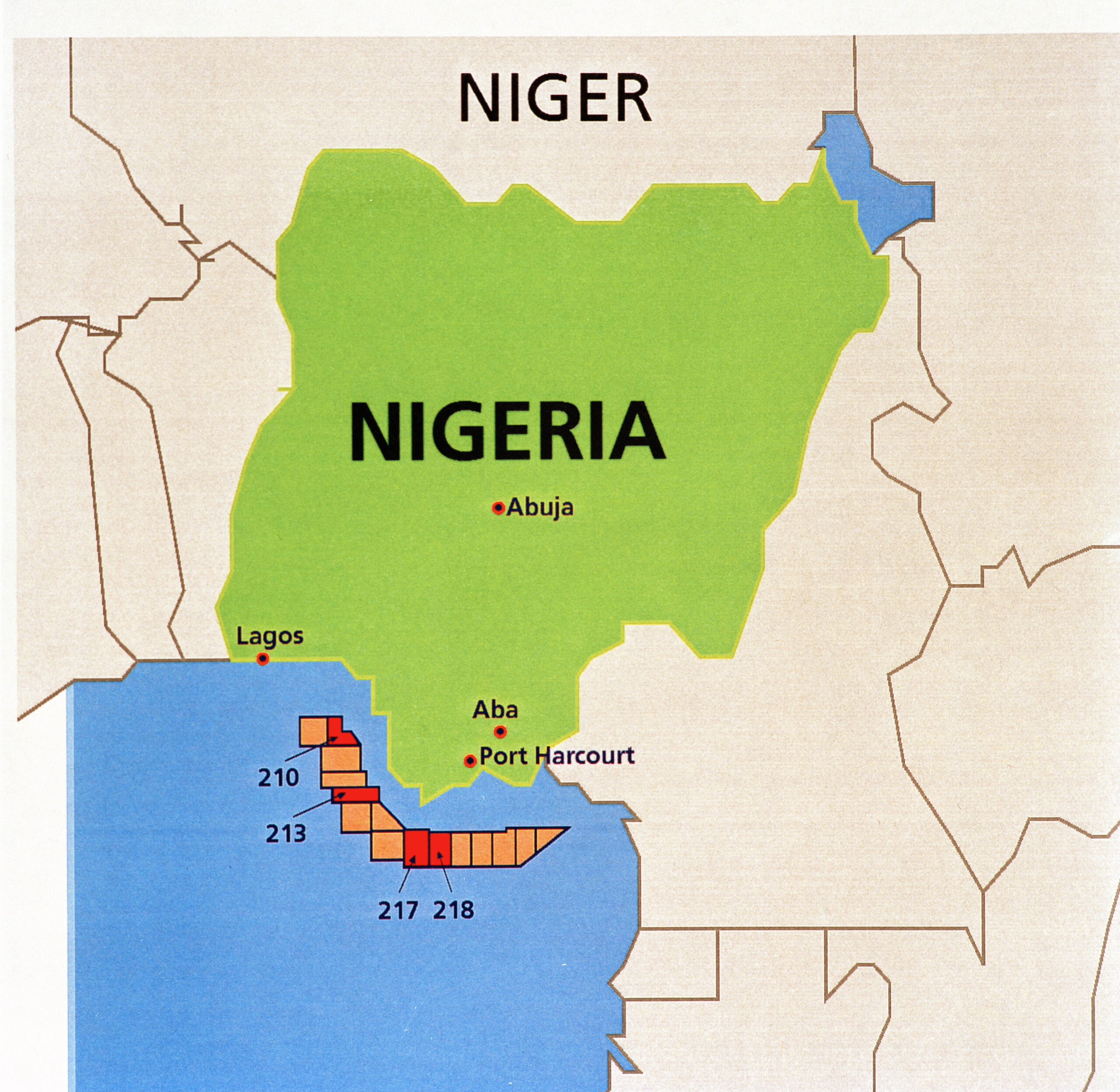
Map of Nigeria. Source: Equinor
Statoil was to be responsible for the alliance’s joint operations in Nigeria, making this country its baptism of fire as an international oil company. A significant proportion of the staff intended to support these activities were located in Stavanger. But a number of BP personnel were included in this Norway-based Nigeria management from the start.[REMOVE]Fotnote: Ryggvik, Helge. (2009). Til siste dråpe. Oslo: Aschehoug: 231
Operational responsibility for the west African commitment was allocated to BP and its London head office. Only a minimal share of alliance personnel were permanently stationed in Africa. While 23 people, all BP employees, worked with Angola from London, only one was based full-time in Luanda. Thirty staff handled Nigeria in Stavanger, with a single person in the African country itself.
Nigeria remained an important priority area until the mid-1990s, and activity there expanded. The alliance succeeded with its strategy and established itself as a leading player in the deepwater areas off the Nigerian coast. That position was completely overturned in 1995, when political conditions in Nigeria deteriorated dramatically.
Ever greater dissatisfaction had spread among many of the people living around the Niger delta. They received little or no share of the big revenues generated by the oil resources in their region. In addition, a massive environmental disaster began to manifest itself in the delta area.
A coup in 1993 had introduced one of the most brutal and corrupt regimes in Nigeria’s history. The repressive government banned all political activity and opponents were jailed. That in turn unleashed extensive protests across much of the country. These increased from 1995 after the military regime executed nine activists from the oil-rich delta – including author and environmental activist Ken Saro-Wiwa.
These executions helped to create pressure from international public opinion. Foreign companies faced demands to pull out of Nigeria. The worst-affected was Shell, which had been producing oil for many years from a controversial part of the Nigeria delta. But organised campaigns were also conducted against Statoil in Norway. The company responded that it did not want to become involved in political processes and chose to accept the political burden of remaining in Nigeria. It argued that the human rights position would not improve if it and BP withdrew.
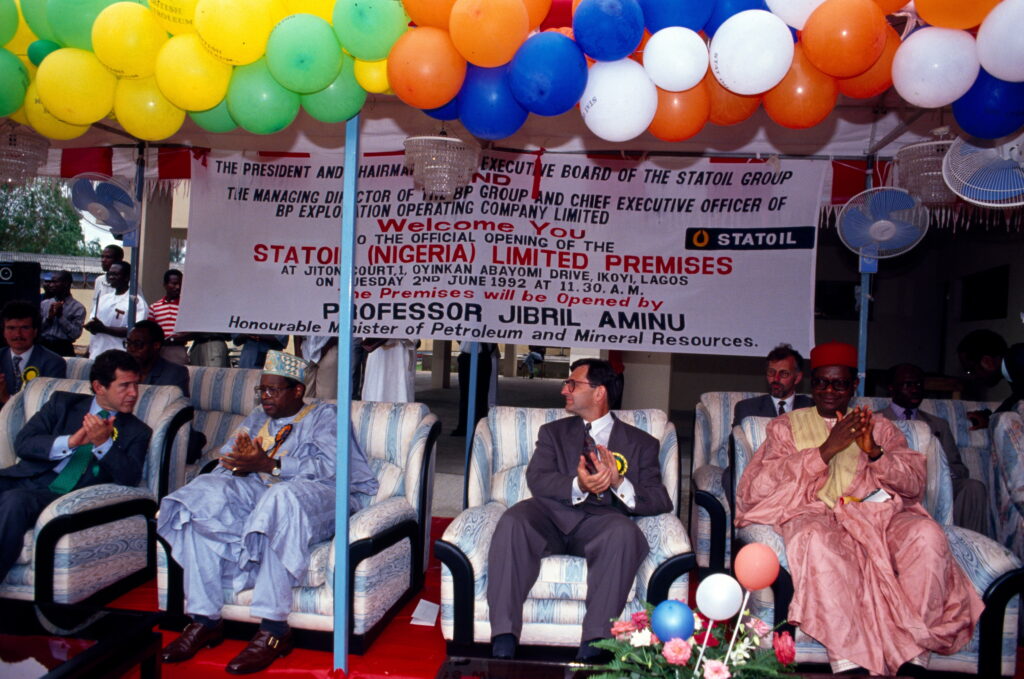
John Browne from BP, Nigerian politician Jibril Aminu and Statoil’s Harald Norvik in Nigeria. Photo: Leif Berge
These developments were not particularly concerning for the alliance to begin with. It concentrated on offshore exploration, and was not involved with oil spills and dead fish in the delta. And, in the middle of the unrest on land, the alliance could raise a mighty cheer when oil was proven with its first wildcat – which also represented the first deepwater discovery off Nigeria. But the jubilation was short-lived, since the resources proved non-commercial. At the same time, the political conditions caught up with the partners.
Statoil had the most to lose by pulling out. Nigeria was where the company intended to demonstrate that it could serve as an operator, even under difficult conditions, outside the North Sea.
It now transpired that repressive regimes, executions and environmental disasters were not the only problems facing BP and Statoil. The financial difficulties were a more difficult challenge. Nor had the alliance succeeded in securing its own operatorships. And its interests in other fields had also failed to yield sufficient oil to justify the exploration costs. The accounts were looking critical.[REMOVE]Fotnote: Ryggvik, Helge. (2009). Til siste dråpe. Oslo: Aschehoug: 233.
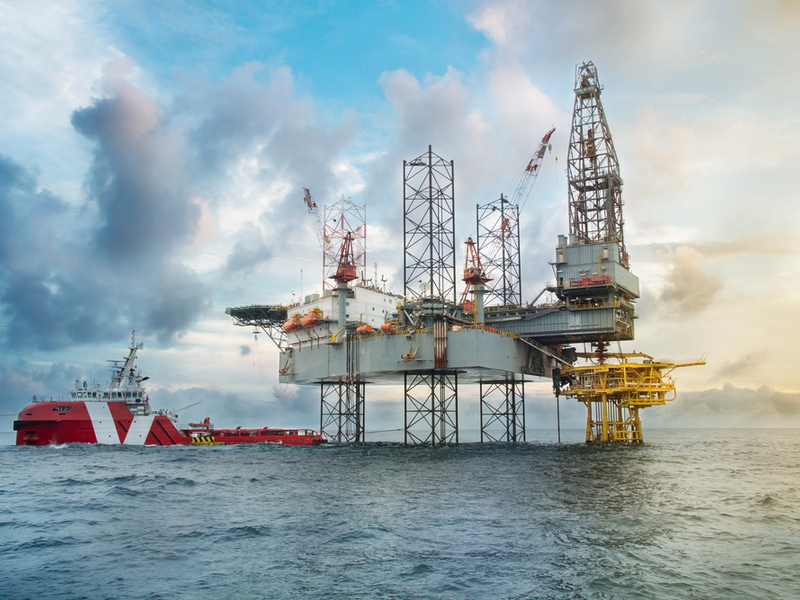
The Agbami oilfield project is one of Nigeria’s largest deepwater developments. Photo: unknown/Offshore Technologies
No big breakthrough occurred on the exploration side. On 20 April 1998, Statoil and BP signed a contract with Nigerian company Allied Energy on the sale of the alliance’s 40 per cent interest in block 210 – the Oyo oil field. It afterwards transpired that neither Statoil nor BP received the sale price. In addition came a price reduction of about 30 per cent, which many have characterised as incomprehensible.[REMOVE]Fotnote: Keilen, Erlend. (2003. 3. november). E24. Statoil fikk aldri betalt for oljefelt i Nigeria
An investigation was conducted, and its report concluded in 2004 that: the fact that the statements obtained are ambiguous, combined with the fact that no written documentation exists about the decisions which must have been taken, provides some scope for speculation. On that basis, the investigation committee would recommend to Statoil that it conducts an internal inquiry to clarify the circumstances. The following day, Statoil declared itself not guilty of corruption at a press conference in Oslo.[REMOVE]Fotnote: E24. (2010. 1. mars). NTB. Hemmelig Statoil-gransking av priskutt i Nigeria.
Although the alliance itself withdrew from Nigeria, Statoil remained on an independent basis and had interests in 2020 in Agbami – the country’s largest deepwater field.
Chevron is the operator of the field with a 67.30 percent ownership interest and Prime 127 has the remaining 12.49 percent. Equinor also operates two exploration licenses – OML 128 and 129 – with a share of 53.85 per cent in both. Six wells have been drilled in both, with two discoveries made. None of the fields are planned developed.
On Equinor’s own website, the company describes that its success in Nigeria “is underpinned by our sustainability work, ensuring we are a responsible operator and are proactive in improving opportunities for the communities where we work.”[REMOVE]Fotnote: https://www.equinor.com/where-we-are/nigeria